DJI Mini 4 Pro review: still the sub-250g drone to beat
A UK-focused DJI Mini 4 Pro review covering image quality, flight time, obstacle sensing and the sub-250g rules — plus who should buy it.
In this article
The short version
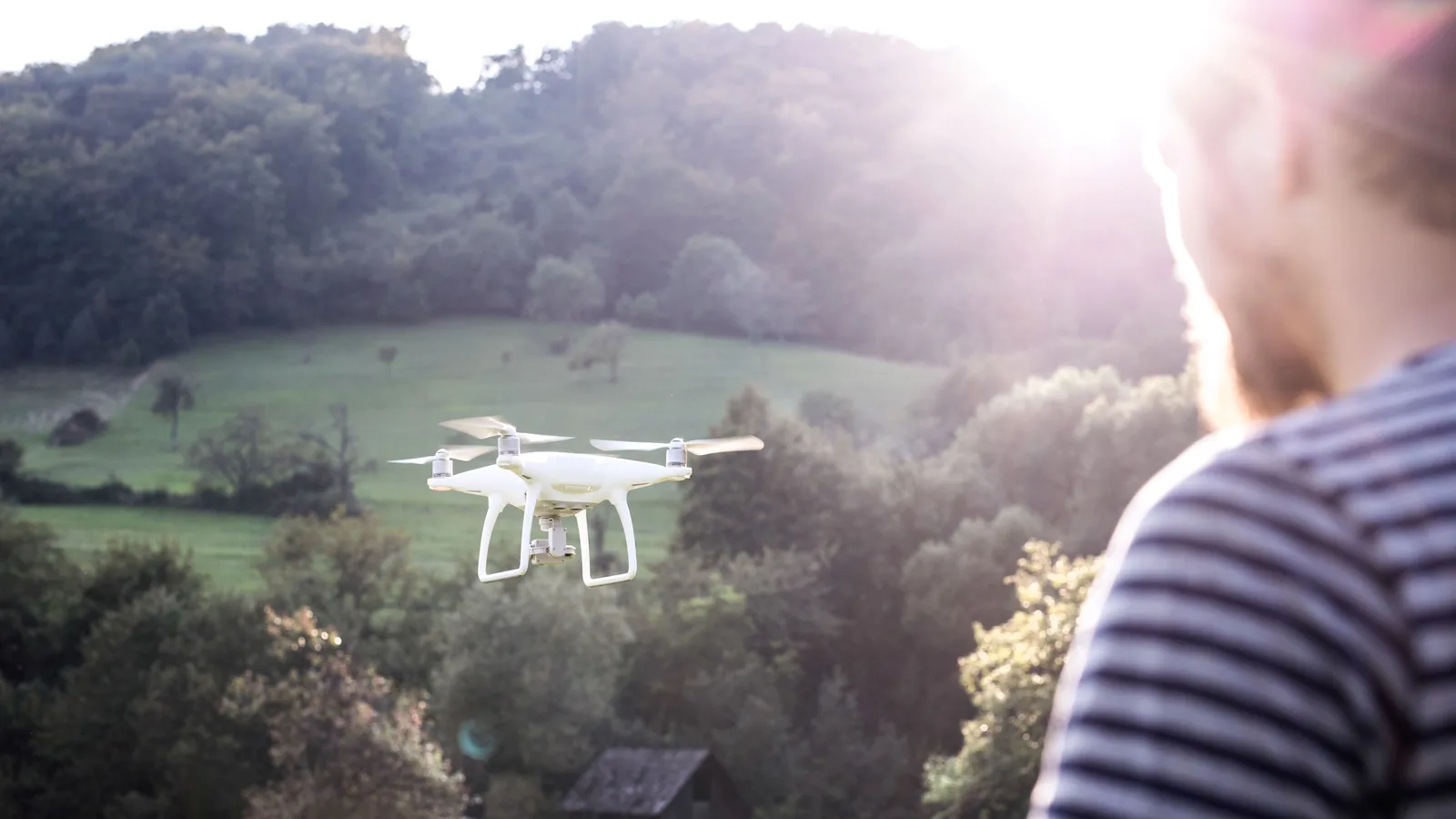
The DJI Mini 4 Pro is the top of DJI's sub-250 g Mini line: a folding camera drone built to be carried in a small bag and flown by one person. It pairs a 1/1.3-inch sensor on a three-axis gimbal with omnidirectional obstacle sensing — the first time that combination has appeared in the Mini series at this weight.
It isn't a cinema drone and it isn't a toy. It sits in the middle: footage that stands up on a client's screen or a phone, a folded body that disappears into a daypack, and controls simple enough that a first-time pilot can be flying safely within an afternoon. The compromises are the ones physics imposes — a small sensor that runs out of puff after dusk, and a price that reflects how much engineering is packed into 249 g.
Our overall score is 4.5 out of 5. What follows is where that score comes from, what the drone is genuinely good at, and who should spend the money.
What you actually get
The headline number is the weight. With the standard battery the Mini 4 Pro stays under 249 g, and that single figure shapes everything else about how you'll use it — which bag it fits in, whether you'll bother taking it out, and which UK rules apply on the day.
The camera is a 1/1.3-inch CMOS behind an f/1.7 lens at a 24 mm equivalent field of view. Video runs to 4K at 60 fps with HDR, and there's 10-bit D-Log M for anyone who grades their footage rather than posting it straight off the card. Stills go up to 48 megapixels, slow motion reaches 4K at 100 fps, and the gimbal rotates through 90 degrees for native vertical shooting.
Around that you get omnidirectional obstacle sensing, DJI's O4 transmission, subject tracking, and a controller with a built-in screen on most kits — no phone clamped to the top, which matters more than it sounds when you're wearing gloves on a cold morning.
- Weight
- Under 249 g with the standard battery
- Sensor
- 1/1.3-inch CMOS, 24 mm equivalent, f/1.7 aperture
- Stills
- Up to 48 megapixels
- Video
- 4K up to 60 fps with HDR; 10-bit D-Log M; slow motion up to 4K/100
- Gimbal
- Three-axis, rotates 90 degrees for native vertical video
- Obstacle sensing
- Omnidirectional
- Transmission
- O4, quoted up to 20 km in the most permissive regions
- Flight time
- Up to 34 minutes standard battery, up to 45 minutes with the Intelligent Flight Battery Plus
Strengths and weaknesses
What it does well
- Under 249 g with the standard battery, which keeps it in the lightest UK category and easy to justify carrying
- Omnidirectional obstacle sensing at a weight where rivals usually offer far less
- 4K/60 HDR and 10-bit D-Log M give the footage room to be graded rather than just posted
- The gimbal rotates for true portrait video, so vertical clips keep the full frame
- Folds small enough for a jacket pocket, with a controller that doesn't need a phone
- Subject tracking holds a moving person or vehicle without a second operator
Where it falls short
- The small sensor runs out of headroom after dusk — usable footage, not clean footage
- The heavier Plus battery takes it over 250 g, which changes the rules that apply
- Quoted transmission range is a laboratory figure; legal line of sight is the real limit
- It is not a cheap first drone, and the accessories add up quickly
- Gusty days still show in the footage, however well the gimbal stabilises
None of those weaknesses is a dealbreaker on its own; the question is which ones you'd notice. If you shoot travel, landscapes and daylight social content, you'll rarely touch the limits. If you're chasing interiors, evening events or anything that needs clean shadows, you'll feel the sensor's size in every clip, and no amount of noise reduction in the app hides it completely.
How it scores where it counts
- Image and video quality
- 4.5 / 5
Excellent in daylight, with 4K/60 HDR and 10-bit colour; the small sensor is the ceiling once light drops.
- Portability
- 5.0 / 5
Folds down and weighs under 249 g with the standard battery — the rare drone you take out without planning.
- Flight time and range
- 4.5 / 5
34 minutes standard, 45 with the Plus battery. Real flights are shorter; legal line of sight limits range first.
- Obstacle sensing and safety
- 4.5 / 5
Omnidirectional sensing is a genuine advantage at this weight and takes the fear out of new locations.
- Ease of use
- 4.5 / 5
Quick to launch, straightforward app, tracking that works without fiddling. Beginners get going fast.
- Value for money
- 4.0 / 5
You're paying for miniaturisation. Compare the standard kit against the Fly More bundle before committing.
Different drones are judged on different things. For a sub-250 g travel drone, what matters is how often you'll actually carry it, whether the footage survives a big screen, how it behaves near obstacles, and how much of a trip is spent on setup rather than flying. The Mini 4 Pro is strong on all four. The score that holds it back is value, because you're paying a premium for the engineering that made it this small.
Image and video quality in practice
For a drone this light, the sensor is generous, and it shows in the default footage: bright, detailed 4K that needs very little work before it goes out. The f/1.7 aperture helps more than you'd expect, letting you keep the ISO low for longer as the light fades.
Shooting in 10-bit D-Log M is where the drone earns its keep for anyone doing paid work. The flat profile holds highlight detail in skies that would otherwise blow out, and the extra colour depth means a grade doesn't fall apart in the shadows. It costs you a few minutes in the edit.
The 48-megapixel stills mode is best treated as a good-light tool for static subjects — landscapes, rooftops, wide architectural shots. For everything else the standard pixel-binned output is sharper, cleaner and quicker to work with. Low light is the honest weak point: past sunset the noise reduction starts smearing fine detail, and shadows turn to mush. It's a capable evening camera, not a night camera.
Flight time, range and the rules that apply
DJI quotes up to 34 minutes with the standard battery and up to 45 with the Intelligent Flight Battery Plus. Treat both as ceilings. Hovering, wind, cold and the photography you'll actually be doing all eat into them, so plan around having less time than the box suggests — and buy a second battery rather than pushing the first one to the warning bleep.
Range figures deserve the same scepticism. The O4 system is quoted up to 20 km, but that number comes from regions with higher permitted transmit power, and in the UK the legal requirement to keep the drone in visual line of sight ends the conversation long before the signal does. Realistic flying is a few hundred metres, carefully.
Which battery you choose changes more than flight time
| Battery choice | Standard battery | Intelligent Flight Battery Plus |
|---|---|---|
| Weight and the 250 g line | Stays under 249 g, so the lightest UK category applies | Pushes the drone over 250 g, bringing the standard requirements into play |
| Quoted flight time | Up to 34 minutes | Up to 45 minutes |
| Best suited to | Travel, hiking and hassle-free paperwork | Longer shoots and fewer battery swaps mid-job |
Who should buy it, and who should not
Buy it if you're a solo creator, traveller or outdoor photographer who wants one device that covers aerial stills, 4K video and vertical social clips without a separate case, a second bag or a permit conversation at every location. The combination of weight, sensing and image quality is what makes it easy to recommend to someone who flies a few times a month and wants the footage to be good the first time.
It also suits anyone upgrading from an older Mini, mainly for the obstacle sensing: the freedom to fly closer to buildings, cliffs and trees without white-knuckling the sticks is worth more in practice than a slightly better sensor.
Think twice if your work is mostly after sunset — a drone with a larger sensor is the right tool, and no setting fixes that. Think twice as well if you want the cheapest way into aerial video, or if your plans involve flying over events and crowds, which no drone in this class is cleared for.
Buying advice before you order
-
Decide which battery you actually want
The standard battery keeps you under 250 g; the Plus battery buys you around ten more minutes per flight and takes you over the line. If simplicity of rules matters more than endurance, standard is the better starting point.
-
Read the bundle list, not the headline
Fly More kits bundle spare batteries, a charging hub and a bag, but contents differ between kits, so check the exact list for the version you're buying rather than assuming.
-
Budget for the parts that aren't included
You'll need a microSD card rated for 4K write speeds, and a spare set of propellers is cheap insurance. ND filters are worth adding if you shoot video rather than stills.
-
Buy from a UK retailer
Buying domestically keeps returns, warranty and consumer rights straightforward — worth more than a small saving on an import.
-
Learn the rules before the first flight
Read the Drone Code, check local restrictions and your home postcode on a flight-planning app, and do a first flight in an open field with nothing overhead.
On price, compare the standard kit against the Fly More option item by item rather than assuming the bundle is better value — if you'd only ever buy one spare battery, it often isn't. Also check what your contents insurance or household policy says about drones away from home; it's a common gap.
Frequently asked questions
Do I need a licence to fly the DJI Mini 4 Pro in the UK?
With the standard battery it sits under 250 g, which places it in the lightest Open-category band and keeps registration and training requirements to a minimum. The Drone Code still applies in full, and adding the heavier Plus battery changes the weight class. The CAA reviews the rules periodically, so check the current position before flying.
Can it shoot vertical video for social media?
Yes. The gimbal rotates through 90 degrees so the camera films portrait natively, which means you keep the full frame instead of cropping a landscape shot and losing resolution.
How does it cope with wind?
DJI rates it for winds up to roughly 10.7 m/s, which covers most UK hill and coastal days short of a gale. The gimbal keeps the horizon steady, but gusts still show in the footage and flight time drops noticeably.
Is the Fly More Combo worth the extra?
If you'll fly more than a couple of times a month, usually yes — spare batteries and a charging hub remove the biggest practical annoyance, which is waiting for one battery to top up. Check the exact contents, because bundles vary between versions and regions.
Can I take it on a plane?
Yes, and the light weight helps with cabin luggage limits. Drone batteries have to travel in the cabin rather than checked baggage, and each one must fall within your airline's watt-hour limit, so confirm that before you pack.